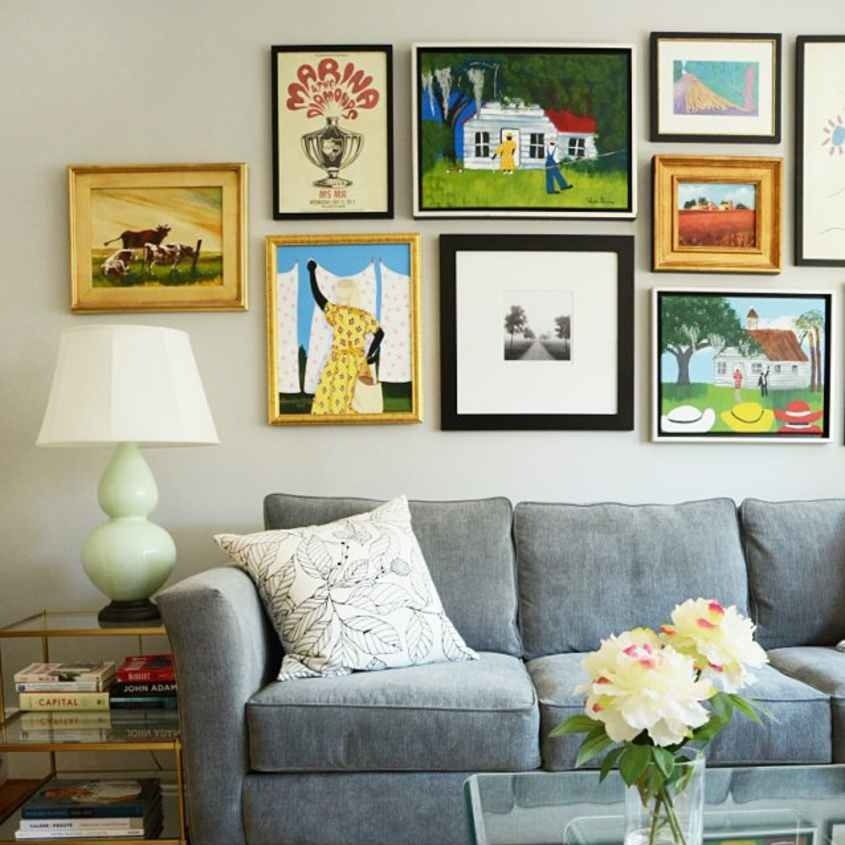
Art above a sofa can start at about two-thirds of the sofa’s width, whether you choose a single frame or a group. Compare the finished outside edges, including the frame and any gaps between pictures. That gives you a useful trial size; the surrounding wall and the artwork’s height still need a look before you commit.
Measure the sofa before choosing the art width
Measure a straight sofa from the outside of one arm to the outside of the other, rather than across the seat cushions alone. If you haven’t chosen the sofa, settle its position first; our guide to choosing the right sofa size covers that earlier decision.
Apartment Therapy describes the two-thirds approach as a rule of thumb and applies it to both individual pieces and gallery walls. Use that proportion to compare candidates, then judge the actual arrangement in your room.
| Sofa’s overall width | Two-thirds trial width for the framed art or whole group |
|---|---|
| 72 inches (183 cm) | 48 inches (122 cm) |
| 84 inches (213 cm) | 56 inches (142 cm) |
| 96 inches (244 cm) | 64 inches (163 cm) |
These are calculated examples, not required product sizes. A nearby available size may suit the room better than an exact match, especially beside windows or wall lights.
Check a single picture’s outside frame dimensions
Once you have a trial width, check what the art seller actually measures. A print size can describe the paper or image, while the finished frame extends farther. Ask for the overall framed width and height, including any mat and frame, before using the listing in your layout.
A large abstract picture above a pale blue sofa makes those outside edges easy to see. The frame is part of the shape you are comparing with the furniture below.
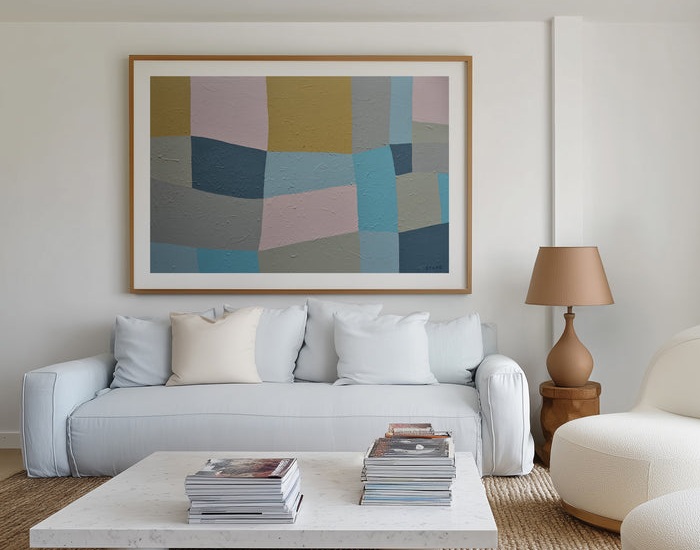
Check height alongside width. A tall square and a shallow landscape can span the same distance yet leave very different amounts of wall above them. Include the top of the sofa back and any molding, ceiling slope, or wall light in the paper layout.
Count the gaps in a gallery wall’s total width
A group of pictures needs the same outside-edge comparison as a single frame. Measure from the far left edge of the leftmost frame to the far right edge of the rightmost frame. The empty spaces between them belong in that total.
For example, two frames each 26 inches (66 cm) wide, separated by a trial gap of 4 inches (10 cm), span 56 inches (142 cm). That matches the two-thirds starting point for an 84-inch (213 cm) sofa. The gap here is an example to test, rather than a spacing requirement.
For a mixed gallery wall, the frames may overlap in height or sit in uneven rows. Measure the complete arrangement after laying it out; adding every frame’s width would overstate the span when some pictures sit above others.
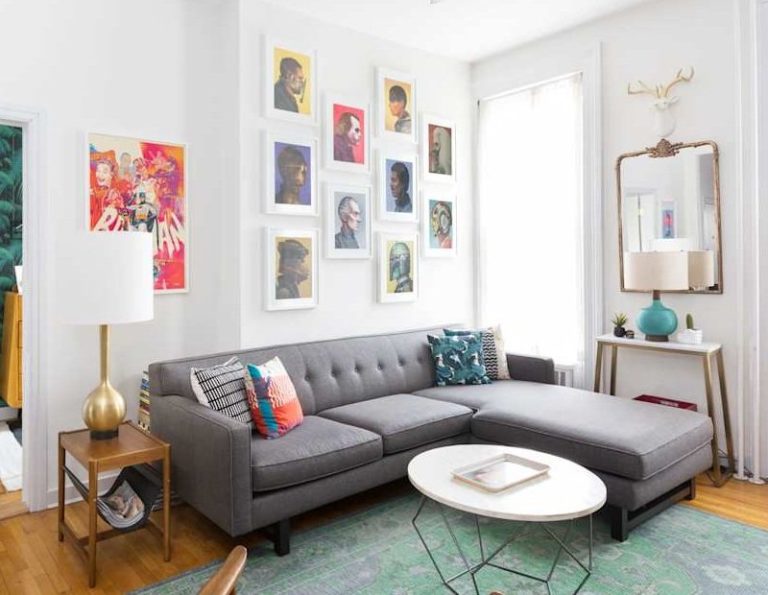
The sectional in this room also shows why the wall-facing back matters. For art over that long back, use the corresponding sofa section as your reference. Adding the projecting chaise length to the back width would compare measurements running in different directions.
If the seating layout changes, check the art again. The same principle of comparing furniture within the actual seating area also appears in our coffee table sizing guide.
Try the complete framed outline on paper
The width calculation becomes more useful when you can see the height too. West Elm’s wall-art instructions recommend arranging pictures on the floor, then using paper templates on the wall. The method lets you compare layouts before making mounting holes.
Trace the outside edges of the frames onto paper and cut out the shapes. For artwork you have yet to buy, draw templates using the confirmed overall dimensions. Arrange a group on the floor first, then transfer the paper shapes and their chosen gaps to the wall with painter’s tape.
Designer Emily Henderson describes roughly 8 inches (20 cm) above furniture as her preference, with room to adjust. Try that visual starting point between the sofa back and lowest frame edge. Check the arrangement while seated and from the doorway; pictures can still look detached when they sit too high.
Use the templates to compare a wider group, a taller single piece, or a smaller arrangement with more wall showing around it. Check that the tape suits your wall finish before leaving it in place. Final mounting hardware depends on the artwork and wall; follow their instructions when you install it.
When the art you love is smaller than the trial size
A smaller piece can still belong above the sofa if you like the open wall around it. For an arrangement with more presence, compare a larger mat and frame or add related pieces as a group. Recheck the finished outside dimensions after either change.
Avoid spreading small frames farther apart solely to reach the calculated width. The outer measurement may grow while the pictures look disconnected. Move the paper shapes closer together and compare the group again before buying another piece.
The useful endpoint is a layout you like at its actual framed size, with the sofa in place and the gaps accounted for. Keep the paper outlines up while you look at the rest of the seating area; a living room rug sized around the furniture is another part of that overall balance.