
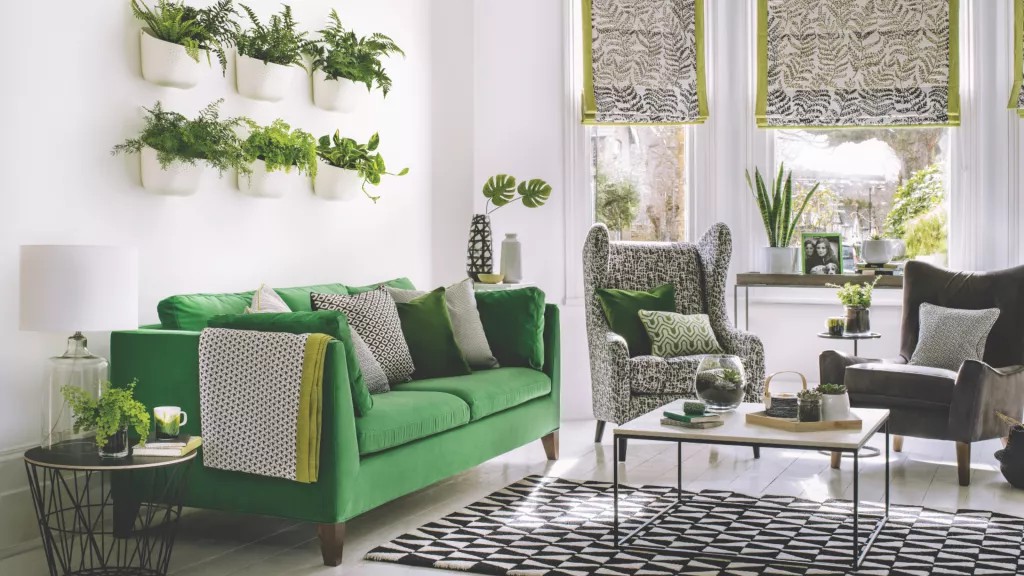
Living room houseplants add greenery, texture and colour to a room.
The living room offers plenty of opportunities to display houseplants. Where do you begin? You can find many living room houseplants ideas that will inspire you on your journey to becoming a plant owner. From how to display the plants to which varieties are best for your space, there are plenty of options.
There’s never been a better time to begin your collection.
If you live in an area where there is not enough time to spend outdoors, or if you are a city dweller, adding plants around your home can help connect you with nature. If you want to awaken your inner gardener, then creating a dedicated space for your plants can make it easier and more manageable.
Living room houseplants
Choose houseplants for their appearance and the enjoyment of caring for them, rather than as a way to purify room air. Even though some plants are low-maintenance, they require a little care to maintain them.
There are many different varieties. Some prefer shade and require little water, while others need a lot of sun. There are houseplants which are difficult to kill, so they are a good place to start if you are not a great plant parent.
1. Add texture to your scheme with these.

Plants are extremely versatile and can add a lot of texture to your home. You can choose plants with different leaf shapes, such as chunky and variegated, thin and wispy or large plates.
Pots and planters can also add texture to your space. Think rattan baskets or concrete containers.
2. Give them their own space
A console table or bench that is dedicated to your houseplants can be a wonderful idea. You can store your favorite green-fingered book underneath and group them all together.
Group houseplants with different leaf shapes and heights to create a varied display.
3. Transform your living space into a botanical paradise
Let’s be honest, if houseplants are your new hobby, then embrace the theme of botanicals in all its forms. Artwork with delicate patterns, cushions in leafy prints and a green textured carpet will make your living room the perfect place to start adding houseplants.
Consider displaying your plants in an updated way for a contemporary living room. A glass terrarium can make an attractive display. Choose the container and potting mix to suit the plants. Use humidity-loving plants in a closed terrarium; most cacti and succulents need an open container and free-draining compost.
4. Add trailing plants in a storage unit
Storage is a necessity, especially for living rooms. However, the angular shapes of these items can make them feel hard in comparison to curved sofas and armchairs. To soften this look, place a pot on the top shelf.
The unit will not only allow you to display personal belongings, but it also provides the perfect place for your plants without dominating the entire room.
To add interest, add a few plants of different sizes to create levels. This will add drama and textural to the living area.
5. Display succulents in unusual containers
Take succulents and Cacti, for example. You can then house them in interesting containers that enhance their shapes.
Find unusual containers and pots that are also three-dimensional. You can even find a custom made container to hold multiple pots of succulents on a console. They will look like works of art that you can display with pride.
6. Plants that match your scheme
Choose prints and patterns that are in shades of green. This will ensure that any plants you purchase will match the colour. There’s nothing better than a little cohesion when it comes to creating a room with a cohesive design.
Try modern geometric designs to give your decor scheme a contemporary feel. For a living space, strong simple shapes in green, taupe and a brown palette will compliment house plants beautifully.
7. Take it high and low
You can display plants in two different ways. First, you can scatter them around in the living room. They could be placed next to the couch on the floor or on a mantle. Or, they could form a small trio on the coffee-table. You can also go all out and display them in a group.
To really make a statement and bring spring indoors, group houseplants in different sizes and arrange them in an open and bright area. A houseplant cluster is a great way to fill any empty corners and brighten up any room. You can also mix and match different plants for a unique display.
By layering plants with different textures and heights you can create an impressive effect.
8. Plants can be placed next to your sofa
Use the space next to your sofa to display your plants. Stands are great for placing the plants higher. You can place one on a table, and use the other as a display area. They can then be better integrated into your scheme than if you were to place them on a shelf.
The use of houseplants can bring nature into your home. We go a step further by adding furniture in a natural shade (we offer a wide range of greens) and a splash of color and pattern to complement a plant collection.
What is the best plant to use in a living area?
There are many living room plants ideas. You can narrow them down based on the amount of light in your room.
Snake plants are drought-tolerant and low-maintenance; let the compost dry out before watering. Cascading pothos look good on mantles or shelves. Kentia palms suit bright, filtered light; keep them out of strong direct sunlight.
Plants can also add color. The Golden Petra’s leaves are a striking mix of yellow and red. You can find something to suit every living room size and style. Just make sure that you are able to meet the needs of your plant before you purchase.
What plants can I use in my living area?
It really comes down to personal preference. We are all attracted to certain colours, shapes and sizes, and this includes plants. You might love the trailing ditsy plants, like string of Pearls or the lush green foliage of a Yucca.
If this is your first time growing houseplants, you might want to start with small plants or low-maintenance succulents to add some life to your home.
Trailing plants are a great way to upgrade shelves and small spaces. They’re both attractive and cost-effective, so you can get maximum impact with less. Mix and match to create a shelfie that will make you smile and get you ready for 2023.
How can I decorate my living space with live plants?
We play with scale and colour, selecting prints and patterns which work well together. Our accessories are displayed in threes. Decorating your living room using live plants can be similar.
Our value houseplants can be grouped with flowering varieties and pots that complement each other for an organized look. You can display smaller plants on tables to make a bigger impact. This will save you money and allow you to create your own mini-jungle in your home.
You could also use a Phalaenopsis as the centrepiece, with succulents and smaller plants displayed nearby in separate pots to suit their different care needs. For Phalaenopsis, provide bright, filtered light and warmth above 16 degrees Celsius. Use bark-based orchid compost, water it without leaving the roots standing in water, and keep water out of the crown.