
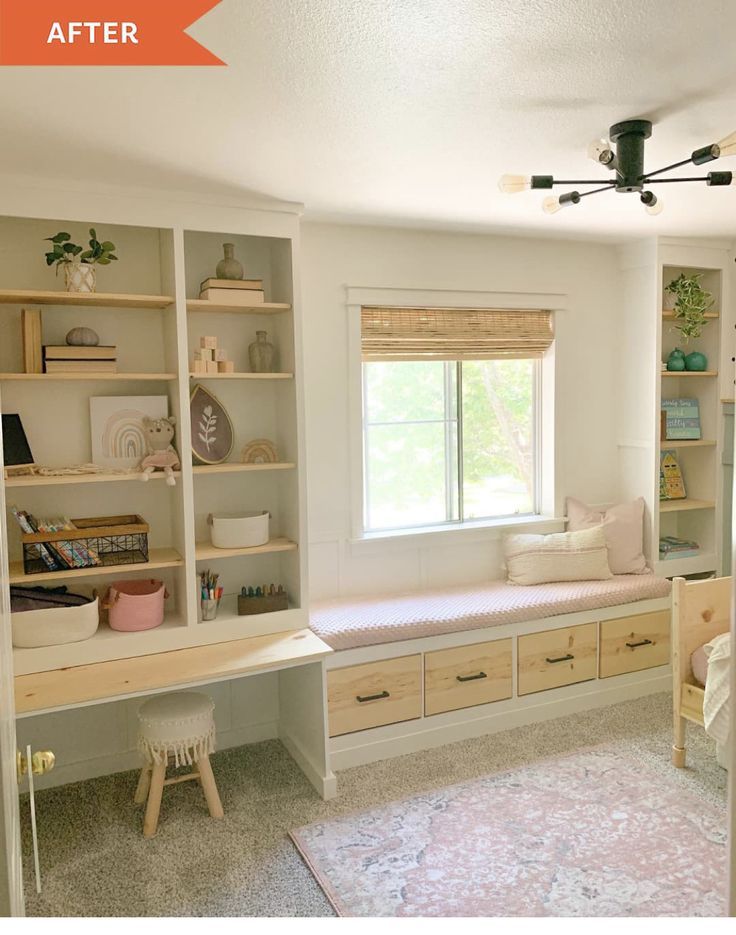
Toy storage in a small bedroom works better when everyday toys have an easy return spot and spare sets live elsewhere. Start with a reachable shelf or basket, then consider space beneath the bed. Check where a container goes when it’s pulled out, as well as where it fits when closed.
A bin that fits neatly under the bed can still block the room during play. The useful question is whether a child can get a toy out and put it back without moving other furniture.
Choose toy storage by the space it needs when open
The storage footprint changes during use. A cabinet needs room for its doors, a drawer needs space to slide, and a basket needs somewhere to sit while the toys are out.
Before buying, measure the available opening and the container’s outside dimensions, including handles or wheels. Check the space in front with the bedroom door and nearby drawers open. There’s no single bin size that suits every bed and room.
| Storage option | Check before choosing | A reason to choose something else |
|---|---|---|
| Baskets in a low shelf | The basket comes out without moving another item | Baskets are too heavy or awkward to return |
| Under-bed drawer | The loaded drawer can pull out on the actual floor | A bedside table or narrow aisle blocks it |
| Toy bins inside a closet | The door opens and clothing stays accessible | Toys displace the clothes the room must hold |
| Open floor basket | Its regular spot leaves the walking route clear | It becomes a pile beside the bed |
Keep the sleeping arrangement in mind, especially in a small bedroom shared by children. A storage unit that fits between beds still has to leave both children access to their belongings.
Give everyday toys a low, easy return point
Once the opening space works, make the daily toys easy to identify. Group items by how they’re used: vehicles together, a building set with its pieces, and dress-up items in their own basket.
Illinois Extension suggests labeling shelves and toys, using pictures for younger children. Put the matching label where it’s visible when the container is stored; a label hidden on the bottom can’t guide cleanup.
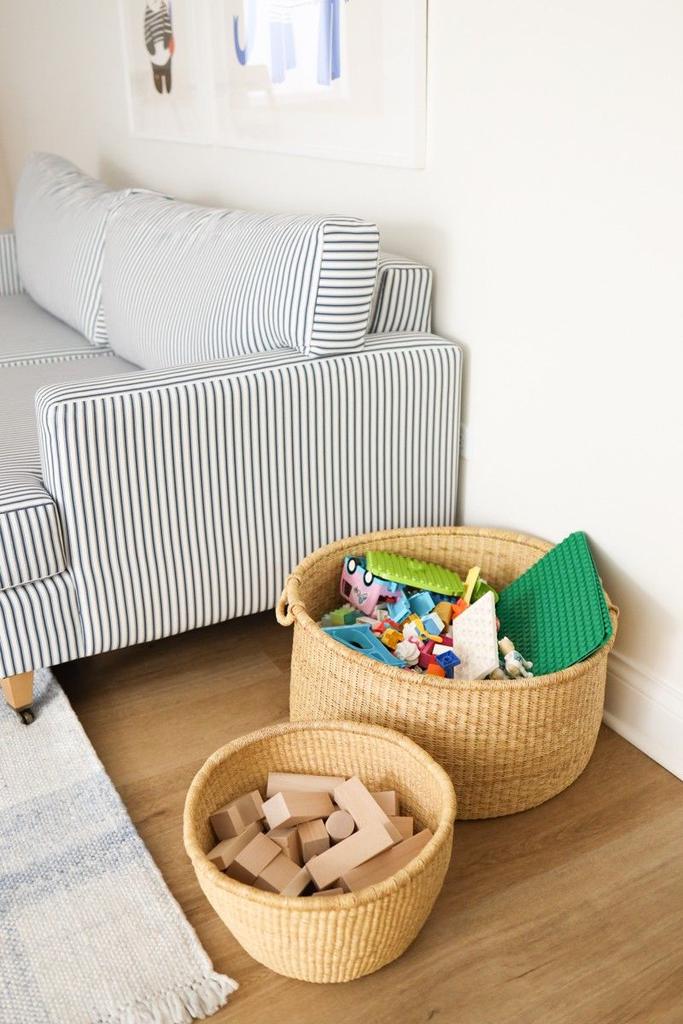
Choose categories the child can understand. If returning a toy means sorting every piece by color, simplify the system before adding more bins. Keep books apart from loose toys; these nursery bookshelf ideas show ways to give books a separate home.
Use under-bed storage only when the drawer can come out
Under-bed space can hold less-used toys or games. Illinois Extension includes an under-bed suitcase among its storage suggestions. A shallow drawer is another option when the bed and floor allow it.
Check the lowest obstruction beneath the bed, not just the height at its edge. Legs and supports may divide the space. Then check the pull-out route: a container that fits underneath may be too long to remove beside a nightstand.
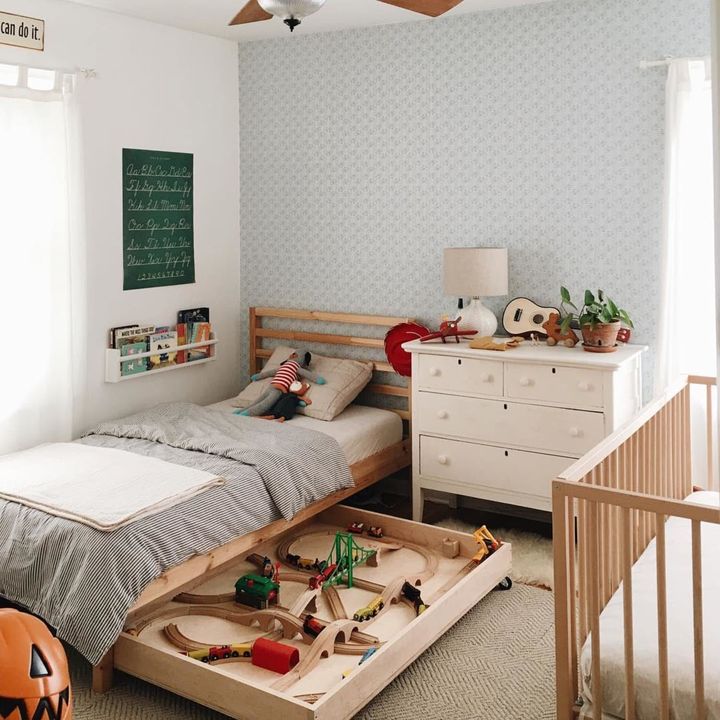
Try the loaded container on the actual floor before committing to a matching set. Wheels may catch on a rug, and an overfilled bin may scrape the bed frame. If access is awkward, reserve that spot for adult-managed storage or use a different location.
Separate toys in use from toys waiting their turn
Even accessible storage can overflow when it holds the entire collection. As a practical starting point, keep current favorites in the bedroom and put spare sets in a separate, adult-managed location. Swap a set when interests change; a fixed rotation calendar isn’t necessary.
Keep the parts of each stored set together, with a label visible from the front. If there’s another place to play, these playroom layout ideas can help you decide which activities belong outside the sleeping room.
Containers don’t have to match a passing room theme. Plain baskets and replaceable labels are easier to reuse as toys change, a useful counterpart to the limits of theme-heavy kids’ rooms.
Keep toy storage from becoming a climbing route
Keep spare toys off dresser tops. The U.S. Consumer Product Safety Commission advises removing toys and other tempting objects from furniture tops so children aren’t encouraged to climb for them.
Follow the furniture manufacturer’s instructions for securing storage furniture. CPSC’s Anchor It campaign calls for anchoring top-heavy furniture and installing the anti-tip devices supplied with new dressers.
For daily toys, an open basket avoids a hinged lid. CPSC warns that storage and toy chests can trap children inside or injure them when a lid falls. Check an existing chest’s recall status and manufacturer guidance before using it for toys; an old blanket chest deserves the same attention.
Fix the part of toy cleanup that keeps breaking
Once the room is arranged, watch where toys accumulate. The same pile returning to the same spot can tell you more than another set of matching containers.
| What keeps happening | What to check | A change to try |
|---|---|---|
| Toys stay beside the shelf | Returning the bin requires moving other objects | Clear the opening or relocate the bin |
| A whole bin gets emptied to find a toy | Unrelated toys share a deep container | Split them into simpler groups |
| Drawers stay open after play | Toys prevent them from closing | Reduce the contents and check for trapped pieces |
| Spare sets spill onto the floor | Daily storage also holds rarely used toys | Move the spare sets out of the daily area |
Start with the problem that happens most often. Move a container, simplify a category, or reduce its contents, then see whether the toys return to their place more easily.